

Why Mini Splits Aren't As Popular In The US As The Rest Of The World
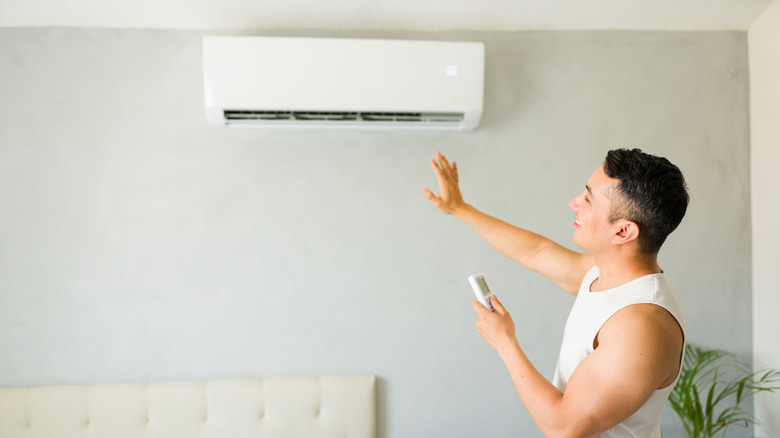
How do you stay cool during the summer? If you live in the US, you probably use an energy-efficient window air conditioner or a different type of A/C like a central cooling unit. If you live anywhere else, you likely rely on a mini split — a ductless heating and cooling system that uses heat absorption to cool houses. Why aren't mini splits more popular in the US? Blame the government.
While the first mini split system was invented in the late 1950s, the technology didn't travel over to the US until the late 1960s via Comfort-Aire's Twin Pac, which was sold by Sears. However, the U.S. Congress cut that particular system's life short. Kind of, anyway; in 1987, Congress passed the National Appliance Energy Conservation Act, which set up energy efficiency ratings for electrical devices. The Twin Pac couldn't meet those standards, so retailers had to pull it from store shelves. But do you know what met the energy efficiency standards? Cooling systems that came preinstalled in many US homes.
Countless US households use air conditioning because it is a national treasure. Willis Carrier is credited for making the first modern AC unit in 1902, which gave rise to mass adoption of central air systems. By the 1950s and 60s, houses with air ducts were commonplace across the US, which uses central AC units or other cooling systems. Even if a house's original central AC units didn't meet new energy standards, it just made more sense to buy a new one that did. This is precisely why mini splits took off in countries outside the US: They didn't have the ductwork of American houses. Mini splits cooled European and Japanese homes without the need to install massive systems.
Mini splits are making headway in the US
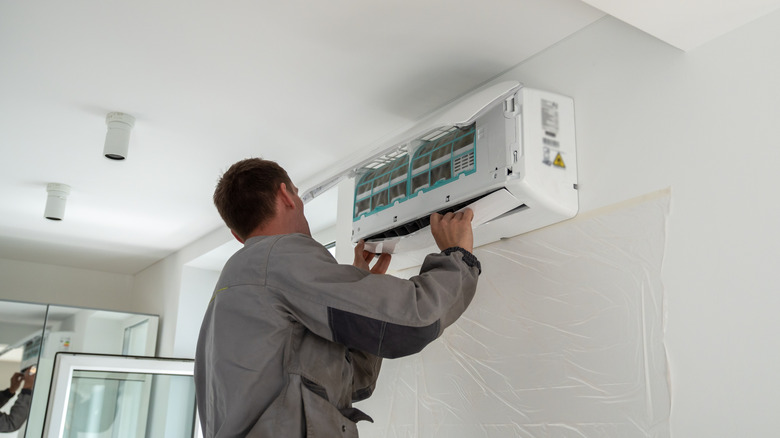
While most US households rely on central air and AC systems, mini splits are gradually becoming more popular stateside. You can buy plenty of systems built by quality mini split manufacturers, but that raises the question of why the stars are suddenly aligning for the products. It comes down to a mix of market and technological factors.
As with many home improvement projects, the upfront cost of installing a new cooling system is a major hurdle, but local and federal governments have taken an interest in subsidizing heat pumps. 2022's Inflation Reduction Act offered tax credits for homeowners who tried to make their houses more energy efficient with certain heat pumps. Yes, in the decades since the National Appliance Energy Conservation Act, mini splits have become far more energy efficient, and since mini splits are technically heat pumps, the act covered them — at least until the highly controversial "One Big Beautiful Bill" gutted the tax credit. Yet despite this setback, many state governments run local rebate programs that help offset the cost of installing and running heat pumps.
Mini split technological advances don't end with just energy efficiency. Well over a decade ago, Mitsubishi revolutionized the mini split industry with the Hyper-Heating Inverter, which not only acts as a heating system but can function in sub-zero temperatures. Mitsubishi basically developed a system that can both heat and cool a house, which is a boon in the US where temperatures can fluctuate rapidly. But efficiency also factors into this capability, as electric heat pumps cost less to heat your house during the winter than even natural oil. What US resident wouldn't love saving money during the most expensive time of the year?