

Tesla Semi-Trucks Could Be The Big Winner In America's Diesel Price Crisis
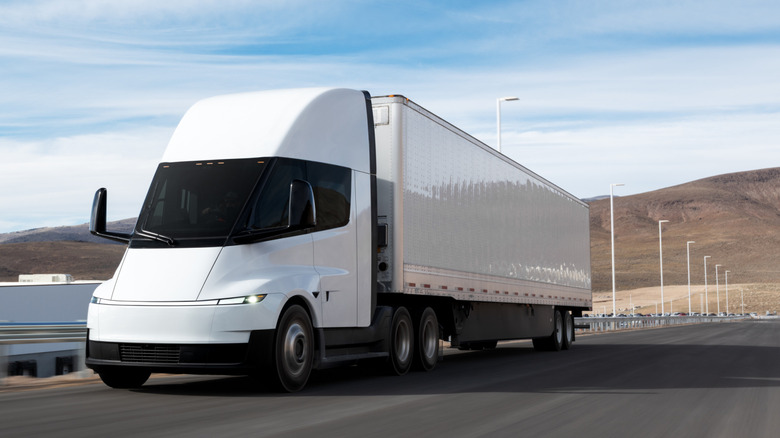
While fuel prices across the board have risen significantly since the start of the Iran War, U.S. diesel prices in particular have spiked alarmingly high in late 2026 due to conflicts in the Middle East and Eastern Europe. These skyrocketing diesel prices don't just make it more expensive for drivers to fill up; they can have a cascading effect across the economy, given how dependent entire industries and market segments are on diesel to get goods to customers.
This has put the trucking industry in a bind, forcing freight carriers to either absorb higher fuel costs or, more likely, pass them to freight customers — and eventually to consumers. So, could this be the window that electric big rigs like the Tesla Semi need to gain a foothold in the industry? Tesla is certainly hoping so, and the timing couldn't be more perfect: The company's electric big rig has entered volume production in Nevada after years of development, testing, and delays.
The jury is still out on the widespread viability of electric trucking, but the Tesla Semi already has several customers who are ready to put the trucks into service. The hope is that the all-electric truck doesn't just save money on diesel fuel costs, but also on maintenance, repairs, and overall cost of ownership.
The streamlined solution?
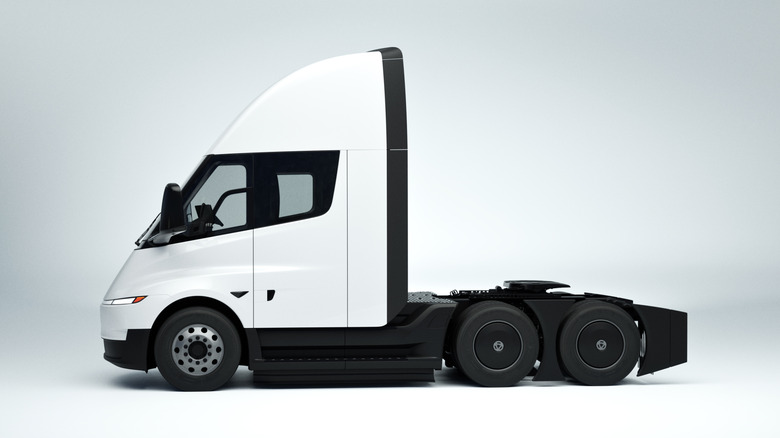
Tesla first showed off its all-electric Semi back in 2017, and a lot has changed since then. The truck has been reworked and updated for better efficiency, with changes informed by lessons learned from the early, hand-built units Pepsi has used for deliveries in California since 2022. Now, with the Semi essentially ready to go, Tesla says it should be able to build as many as 50,000 trucks per year.
While it may be a fortunate coincidence, the huge spike in diesel prices has naturally played into Tesla's sales pitch around the Semi's full-scale launch. Compared to a diesel truck that gets seven miles per gallon — which works out to around 80 cents per mile to operate — Tesla says the Semi should cost between 20 and 30 cents per mile, making for massive savings at scale.
Still, driving range and charging infrastructure remain some of the biggest concerns for any electric vehicle, and those obstacles are particularly crucial for the Tesla Semi, given truckers' concerns about range and charging for long-distance trucking. This is where Tesla's high-capacity Megacharger network comes in: Tesla is building a Semi-specific version of its nationwide Supercharger network and partnering with existing truck stops like Pilot to help make it a reality.
How does the math work out?
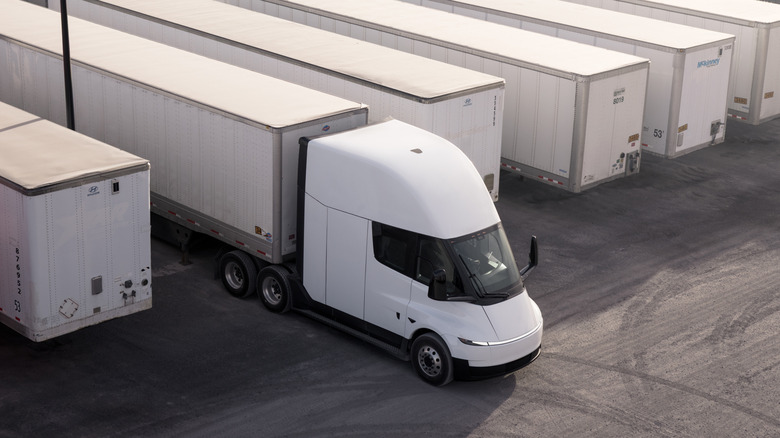
Apart from fuel savings, one of the big selling points of electric vehicles, semi-trucks or otherwise, is that EVs are generally cheaper and easier to maintain than gas vehicles. Indeed, Tesla hopes the Semi will win over trucking companies with its engine-less drivetrain and low-maintenance components like an electric steering system that doesn't rely on failure-prone hydraulic pumps or consumable power-steering fluid. Tesla claims that its Semi fleet has had more than 98% uptime in 2026.
That said, while diesel prices in 2026 may make the Tesla Semi look extremely tantalizing to trucking companies, the situation could reverse quickly. If diesel prices drop to a more reasonable level, the numbers could quickly flip back in favor of diesel trucks.
After all, let us not forget that the auto industry's aggressive EV push in the early 2020s has broadly fizzled out in the face of changing regulatory and market conditions. Time will tell how things play out, but this perfect storm of diesel prices and the Tesla Semi's volume production kicking off could trigger a massive shift in America's transportation industry — and it would come not so much from lofty, green ambitions, but from simple dollars and sense.