

3 Boating Safety Rules To Always Remember When Docking
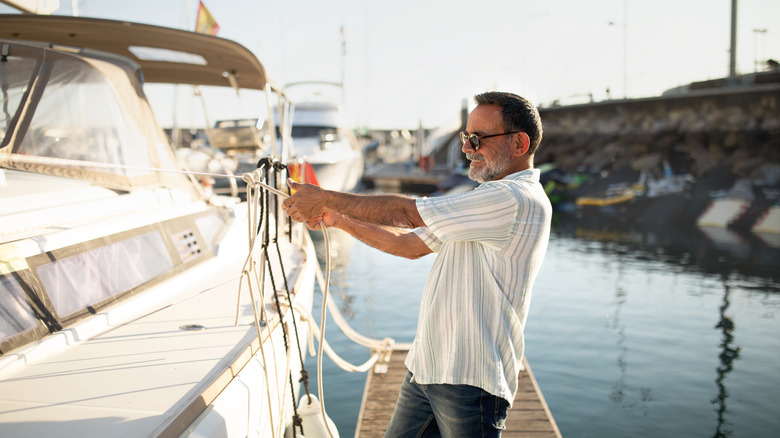
Remembering the importance of boating safety may be easy when you're out on the open water and exposed to potential hazards. However, near the end of a boating trip, whether it be a long journey or a short jaunt on the lake, it can also be easy to assume there's no longer a significant accident risk. That's not necessarily the case, though; exercising care when docking is just as important as it is in the middle of a boating session. It's particularly valuable to keep certain safety tips in mind throughout the docking process.
Remember that knowing how to properly dock your boat is just one element of docking safety. You should also familiarize yourself with the types of equipment that should always be on a boat, the one-thirds rule in boating, and other boating safety essentials. After all, any boating trip will be more enjoyable when you've taken the steps needed to keep everyone safe and comfortable.
Prepare to dock ahead of time
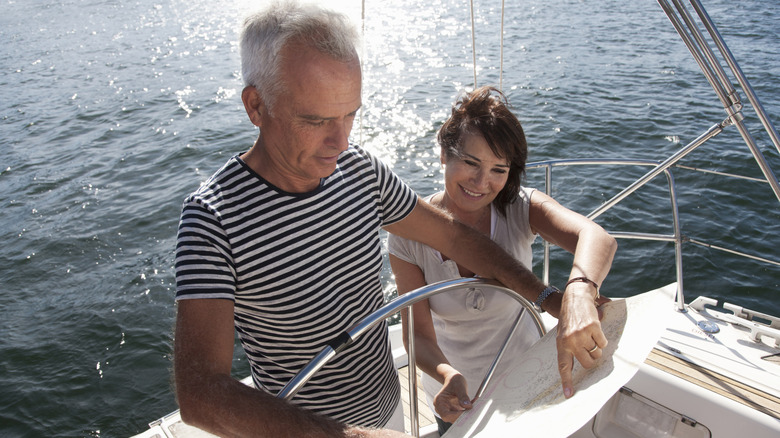
Taking certain steps before docking can boost the odds of the process running smoothly and safely. First, it's important to slow down to idle speed as you approach the dock. When you need to maneuver the boat, small throttle bursts are acceptable.
Depending on various factors, such as the size of your vessel, others on the boat may need to play critical roles as you dock. Of course, you should only assign responsibilities (like handling fenders and lines) to those with the experience, knowledge, and ability to handle them. Confirm that everyone understands their jobs so that there's no confusion about who is responsible for what task as you dock.
You must also confirm that everyone on the boat either has a seat or something to hold onto throughout the process. Docking can involve sudden or unexpected boat movements that can throw someone off their feet if they're not prepared.
Naturally, you also need to be certain all gear and equipment are prepared for docking. This could mean making sure the fenders are positioned on the docking side and the dock lines are on hand when necessary.
Go over the rules for safe disembarking

Accidents can still happen even when a boat is almost safely docked. For example, when the docking process is just about done, some on the boat may feel the impulse to get ready for disembarking. In some cases, this can result in passengers (or even overeager crew members) heading to the edge of the vessel and letting their fingers, hands, or arms rest over the sides. This puts these body parts at risk of injury if the boat suddenly sways in the direction of the dock.
Similarly, some may assume it's safe to leap from the boat to the dock once the boat is relatively close and the docking process is virtually complete. Don't let anyone make this mistake. It's easy to misjudge the distance between the boat and the dock, particularly when the docking process is still technically ongoing and the boat may still be moving. Make sure that everyone understands they are to remain seated or otherwise away from the sides of the boat until docking is complete and you give the go-ahead to disembark.
Pay attention to the wind and current
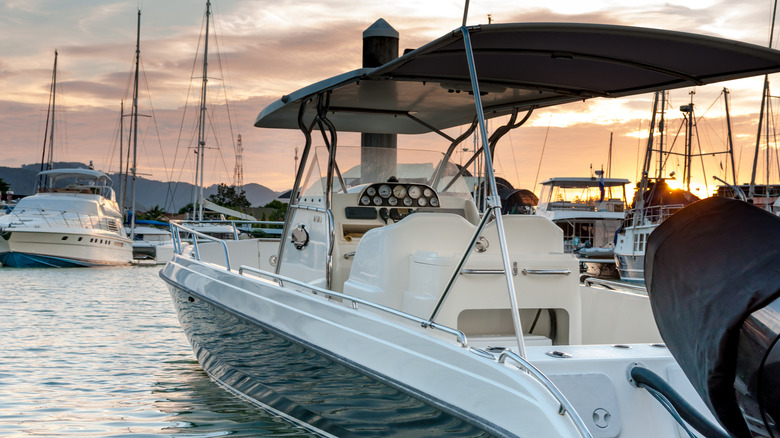
It's generally wise to practice docking in ideal conditions as often as possible. The more practice you have, the more confident you'll be in your ability to safely dock the vessel.
Just keep in mind that conditions won't always be ideal when docking. You need to account for the wind and the current, adjusting your approach to docking accordingly. For example, if the wind is in your face when you're docking, approaching at steep angles is the best course of action. If the wind is at your back, it's best to approach the dock from a shallow angle, operating the vessel slowly to allow the wind and current to push it along without risk of a crash.
As always, check local laws, regulations, and guidelines to determine whether there are any specific nuances to the docking process in your jurisdiction. Now might also be a good time to review what you should know about launching a boat. It can't be emphasized enough: Boating is always a more pleasant experience when everyone involved adheres to safety rules and best practices.