

4 Drawbacks Of Using Studded Tires
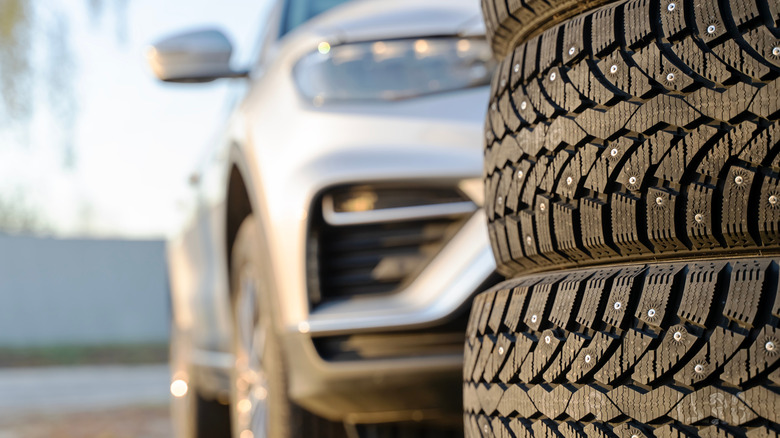
If you have to drive in relatively harsh winter weather, you may consider installing studded tires on your vehicle. As the name implies, these are tires with little metal studs inserted into them. With some studded tires, these come pre-installed. Others are sold so that owners can drive without the studs, inserting them when weather conditions make doing so necessary. That said, owners can't handle this process themselves; a qualified professional must handle the task. On top of that, there are some potential disadvantages to driving with studded tires that motorists should know about before making the switch.
These points are only meant to inform, and this isn't meant to be an argument against using studded tires in general. In some conditions and circumstances, they may represent the best choice. However, before equipping your vehicle with studded tires for the winter, you should first understand why some decide they're not the ideal option.
Studded tires can do serious damage to roads
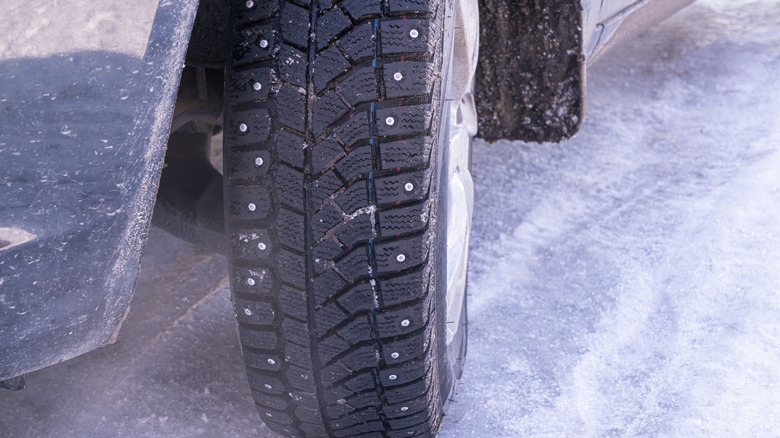
Studded tires can help motorists stay safe in icy and snowy conditions because the studs essentially "bite" into ice to help maintain traction. Unfortunately, this means studded tires can also bite into the pavement beneath them.
The damage studded tires may cause to roadways isn't necessarily minimal. For example, a 2019 analysis of the economic impact of damage caused by studded tires in Alaska determined that they cause about $13.7 million in statewide road damage annually. The researchers who prepared the study also pointed out that this figure doesn't account for the cost (both in terms of dollars and human lives) of accidents resulting from the damage studded tires cause. In other words, studded tires can theoretically damage roads to such a degree that drivers on those roads are more likely to be harmed in crashes.
If you're the kind of person who wants to be a responsible motorist. you likely consider how the choices you make behind the wheel can affect others. Thus, you may decide that using studded tires isn't the best option if it means inconveniencing (and potentially endangering) the other motorists with whom you share the road.
It's also worth considering how driving on studded tires can affect your own property. Depending on various factors, including the size of your driveway and the material it consists of, using studded tires can also cause costly damage to your own driveway.
Studded tires may be a public health concern

As with the above point, this drawback of studded tires has less to do with your individual experience and more to do with how your choices as a motorist could affect others. For example, there's research suggesting that driving with studded tires could expose your neighbors to air pollution during the winter months.
One study shows that studded tires generate ten times as many road particles as friction tires do. Because studded tires cause more wear and tear to a road when compared to other types of tires, they can send more tiny particles of road material into the air. Unfortunately, humans can inhale these particles, which may put them at risk of developing various health conditions.
Of course, if you're the one driving with studded tires, you also run the risk of exposing yourself to air pollution generated via said tires. While this isn't the type of drawback that may be immediately noticeable, in the long run, it could theoretically manifest in the form of serious and costly health complications.
Studded tires can be very noisy

Keep in mind that the conditions that studded tires are designed for aren't permanent. When the ice and snow melt away, you might not have much practical use for your studded tires. Removing them and installing another set of tires could thus become an annoying chore throughout the winter. Remember, even if you have the kind with removable studs, you have to hire a professional to handle the task of removing and re-inserting them.
If you leave your studded tires on until you're thoroughly certain the winter weather season has passed, that means you might have to drive directly on the pavement with those tires. It's probably easy to understand how studded tires can be distractingly noisy when you're driving with them on bare pavement. The metal studs are naturally going to generate noise when they come in contact with the road.
However, as we've already covered, studded tires can damage pavement over time. This may cause greater overall noise pollution. The wear from studded tires can make it so that any vehicle traveling over a particular section of road generates more noise than it would have had studded tires not worn away at the surface.
The legality of studded tires varies
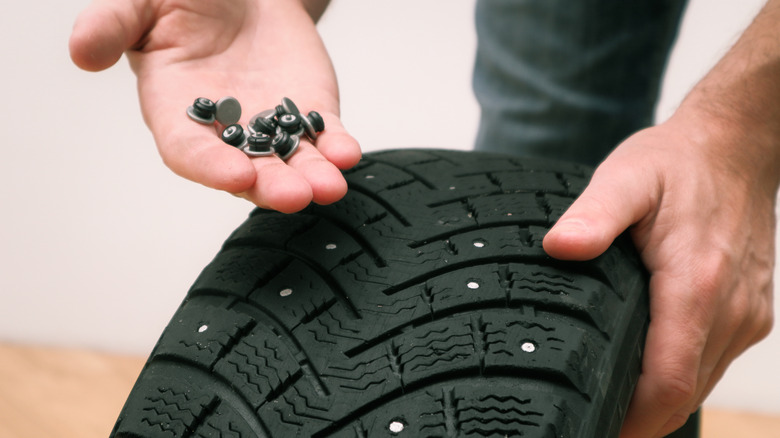
Due to such factors as the damage they can cause to pavement, studded tires aren't permitted in all jurisdictions. Even when studded tires are legal, they may only be so during certain times of year.
If you currently live in an area where studded tires are illegal or where their use is subject to limitations, you may struggle to even find a place to purchase them. However, if you already own a set of studded tires and you move from one state to another, you should check the local laws to confirm you may still use your studded tires.
Just remember that equipping your vehicle with studded tires is by no means the only way you could prepare for the winter weather. If you're considering alternatives to studded tires, you can research the top rated tires for winter and snow to get a sense of what your options are. Now might also be a good time to learn about the difference between winter tires and all-season tires. While this overview wasn't meant to suggest that studded tires are never a good idea, there's no harm in learning about other ways to ensure your vehicle is suitable for winter driving.