

Porsche's Cayenne Electric Embraces What Rival Fully Electric SUVs Try To Hide
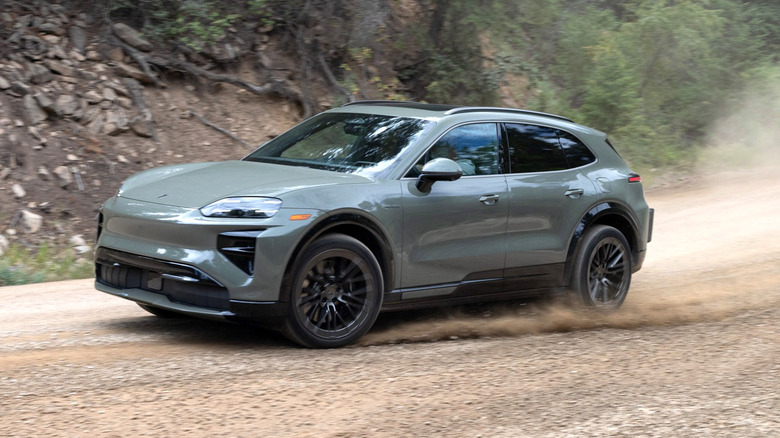
In many ways, the modern EV era runs right in the face of everything that made Porsche's early sports cars so successful and unique for over seven decades. The fact that a four-door Cayenne Electric SUV became by far the most powerful production Porsche ever this year, even capable of outsprinting a 918 Spyder, reveals exactly how much big, heavy, complex machinery now takes priority over lightweight, nimble, and mechanically simple engineering.
Or does it? Fun fact: Ferdinand Porsche first built an EV way back in 1898 with up to five horsepower, speeds around 22 miles per hour, and a range of 50 miles! And if any company has the chops to make an EV solid, durable, capable, and utilitarian all at once, surely Porsche fits the bill. Not that the first attempt at a Taycan proved particularly appealing, but the Cayenne now builds on learning from the challenges of building both the Taycan and the Macan Electric, as well.
 Michael Teo Van Runkle/SlashGear
Still, I arrived at the Cayenne Electric's American media drive program in Colorado very curious to learn whether the whole recipe works well, or falls flat in the face of everything I loved about so many other Porsches over the years.
Fully electric, and the most powerful production Porsche of all time
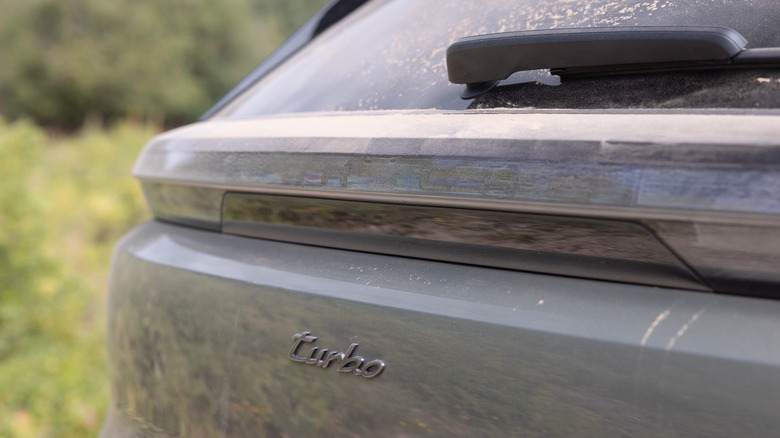
By way of context, I formerly owned a 955-generation Cayenne Turbo, from the years when 450 horsepower and 457 lb-ft of torque out of a twin-turbo 4.5-liter V8 sounded absolutely absurd. Two decades later, the new Cayenne Turbo Electric more than doubles those stats with up to 1,139 horsepower available in Launch Control, and 1,106 lb-ft of torque on tap instantaneously anytime, any place.
 Michael Teo Van Runkle/SlashGear
Yet the new Turbo I jumped into first also stands out as undeniably complex, with a 113-kilowatt-hour battery pack, dual motors, standard hydraulically controlled Active Ride suspension, an electronically actuated clutch-pack rear LSD... All the way to chromatic glass for the panoramic and retractable sunroof, and even available conductive charging capabilities (which should hit the USA later this year or early the next).
How complexity makes a Cayenne Electric possible
If packing so much into the by-now common skateboard platform shared by fellow Volkswagen AG automakers sounds bold, Porsche specifically wanted to point out some ways the new EV bolsters reliability and maintenance versus previous models. Especially the battery, which houses 192 cell in six individually liquid-cooled modules, with control units placed on the exterior to allow for quick and easy dismantling without needing to drop the entire floor out of the chassis.
 Michael Teo Van Runkle/SlashGear
Don't expect any Rimac parts here, however, after the Bugatti split—that tech fits better for the 911's hybrid GTS and Turbo variants, where rapid charge and discharge matters more than big range and brute force in the Cayenne.
 Michael Teo Van Runkle/SlashGear
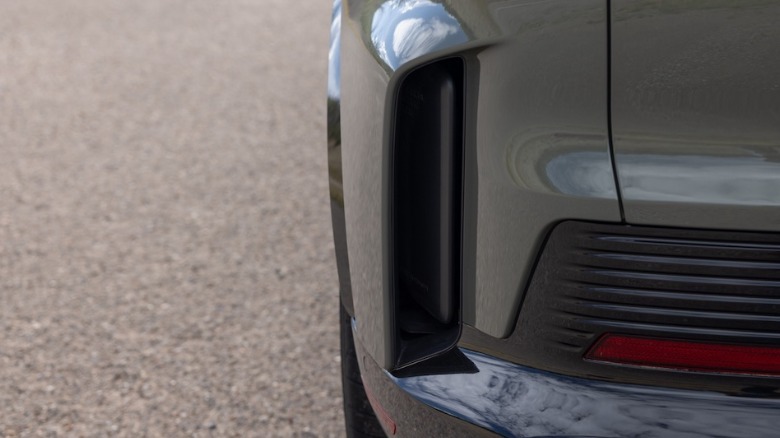
The exterior features plenty of aerodynamic enhancements, too, including active intakes for the front, automatically extending side blades at the rear, and a smooth spoiler to match the subtle diffuser design. All in, the Cayenne Electric SUV manages a surprisingly slippery 0.25 coefficient of drag, while the Coupe cuts that figure down to 0.23 thanks to a lower and sleeker roofline. Coupe popularity varies depending on market, but Porsche only brought a fleet of true SUV Cayennes to Colorado where the planned drive route needed to absolutely maximize every last electron over two different 12,000-foot passes and a healthy dose of gravel, too.
All the power all the time, but so comfortable too
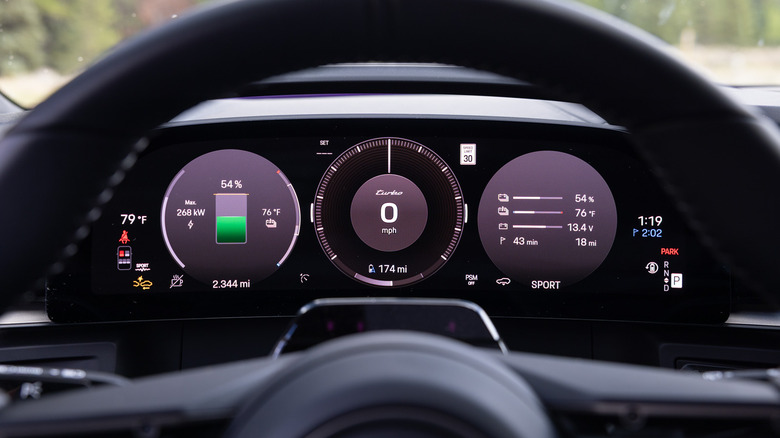
The Cayenne Electric Turbo I tried first, with up to 298 miles of EPA-estimated range (without the smaller wheels and aero tire package that adds another five miles), immediately put any qualms about a long day behind the wheel right at ease. Immediately from the jump, the downright serene cockpit almost lulled me to sleep over a few dozen highway miles. Comfort mode, in particular, leverages the Turbo's standard Active Ride suspension to manage both pitch and roll and can keep the chassis completely flat, but without ruining compliance by any measurable margin.
A twin-turbo V8 used to mean effortless power, but my 955 lacked any semblance of the Electric Turbo's absolutely absurd output available with just the slightest nudge of my right foot. Bose sound system thrumming, ripping past other drivers on the rare Colorado straightaways, I took in a few of the finer details of this fine, fine machine.
 Michael Teo Van Runkle/SlashGear
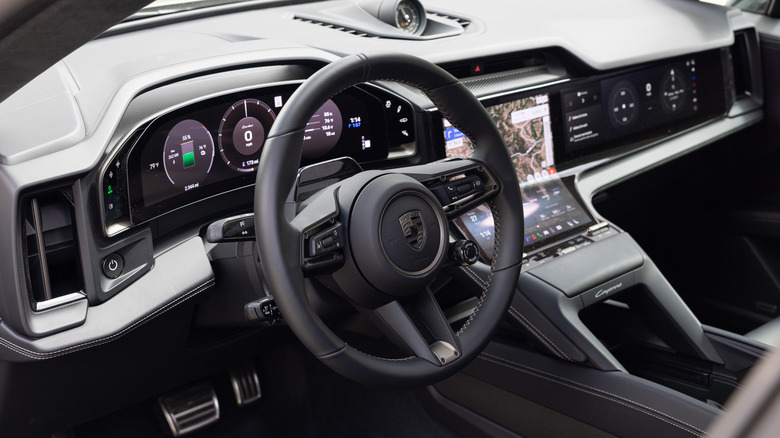
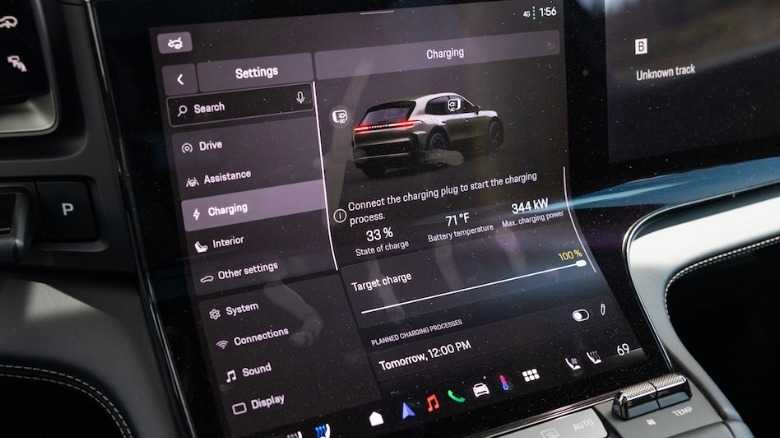
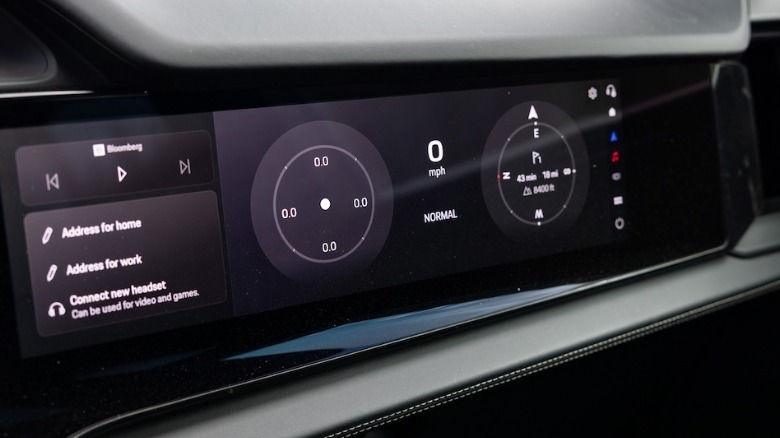
The steering wheel carries over directly from 992-generation 911 models, but a curved touchscreen on the center console stood out as new. Further right, a passenger dash screen might seem silly but let my drive partner keep track of the onboard altimeter as we climbed and climbed.
Acclimating to the new Cayenne
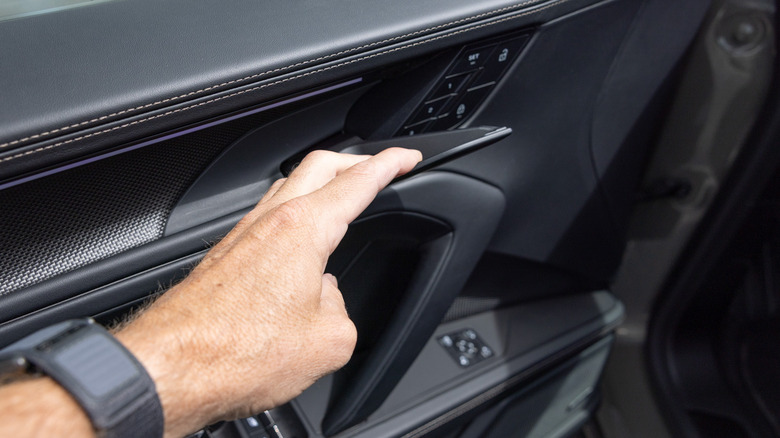
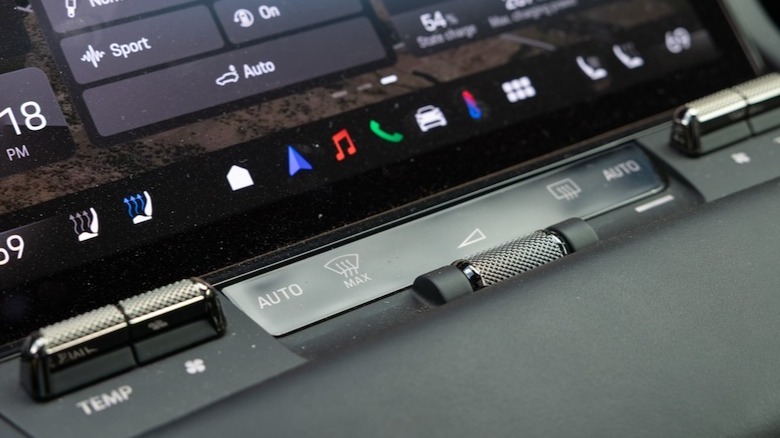
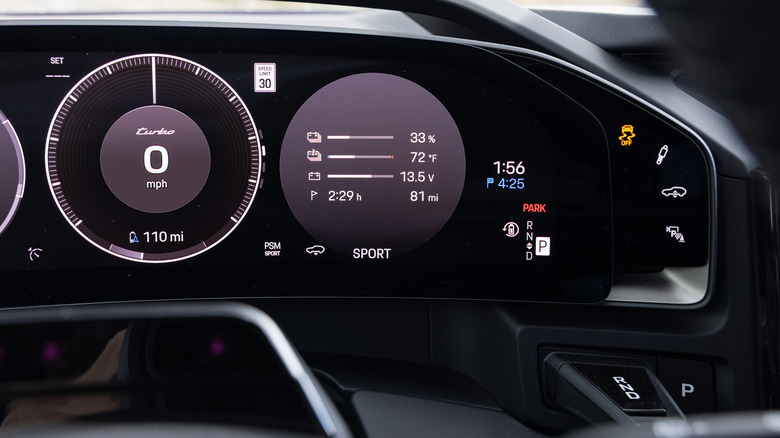
A few weirder elements broke through the reverie, though. Ambient lighting and "Mood Modes" somehow don't match the practicality of a Porsche, even for a family hauler. The adjustment of climate vents exclusively via the touchscreen should be illegal. A terrible new inner door handle release design kept slashing my poor decrepit fingers every time I climbed in and out. And the flat top of the Sport Chrono clock on the dash looked downright peculiar, with a plasticky surround that matched some other materials at a less premium level than expected.
 Michael Teo Van Runkle/SlashGear
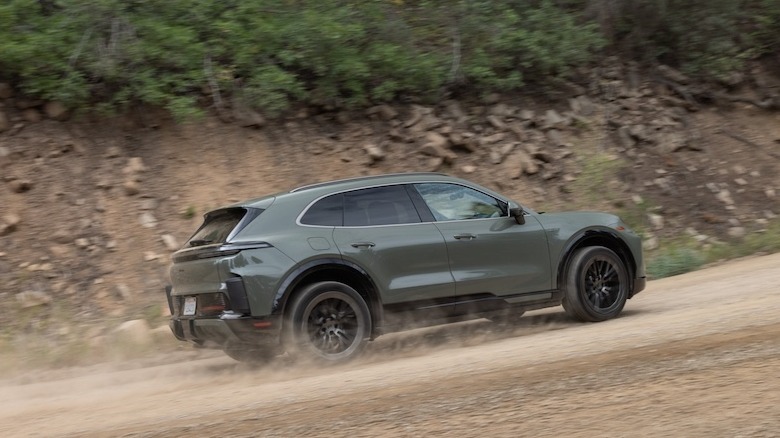
Other touchpoints prioritized tactility, though, from the knurled physical knobs for temperature, fan speed, and infotainment volume to the clever palm pad at the base of the curved screen, which came in handy especially while fiddling with drive modes once we turned onto a long stretch of graded but not perfectly smooth gravel. I pumped up the suspension to the max ground clearance of 9.6 inches, in the name of safety while trying to slide around, but soon enough one of the most unexpected elements of the day cropped up.
Too much grip in the gravel!
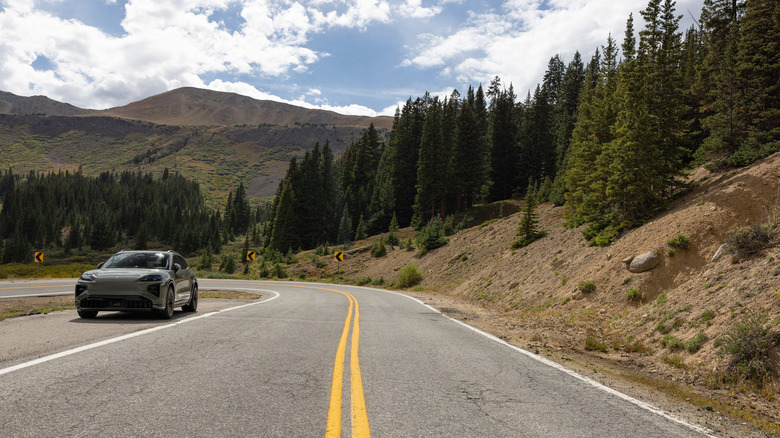
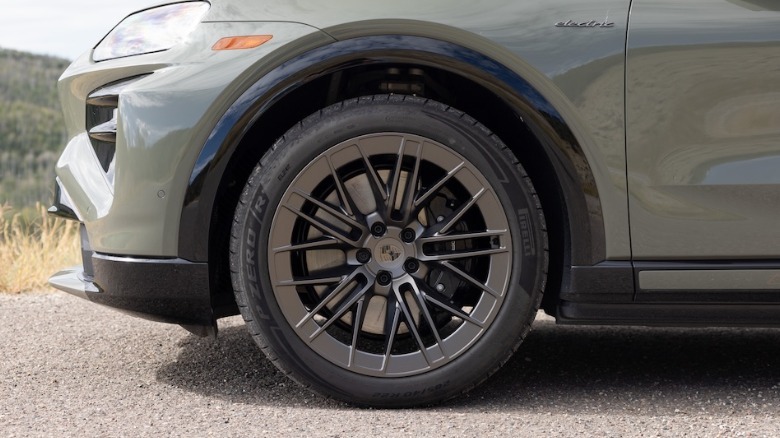
Somehow, the Cayenne Turbo Electric found too much grip in the gravel! As in, if I punched the go pedal, some wheel slip started for just a second before gobs of traction launched the car forward. Similarly for trying to initiate drifts with steering input or hard braking, somehow the 1,100 horsepower and Pirelli P Zero R Elect tires on the optional 22-inch wheels let me hustle down washboards and over ruts easily, but simply not experience much rally car fun. And my stomach turned at the thought of repeatedly hitting 70 miles an hour in the dirt and exacerbating the chances of a blowout from street-focused Pirellis given the 5,695-pound curb weight.
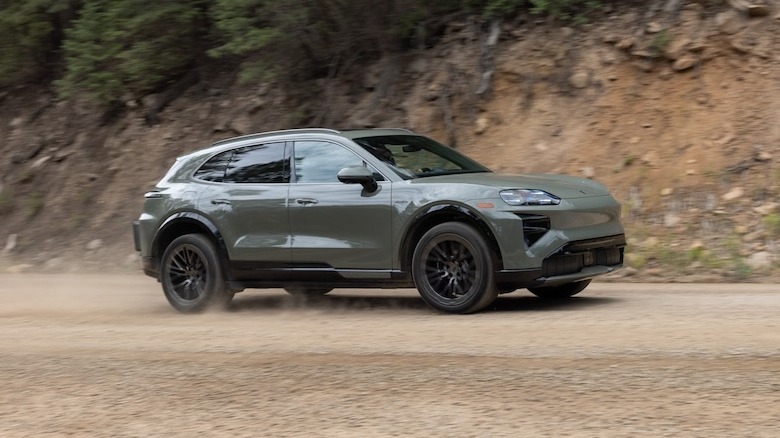 Michael Teo Van Runkle/SlashGear
The Cayenne Turbo Electric actually tips the scales at a fairly svelte number, in reality—my gas 955 from 2006 came in at just shy of 5,200 pounds. Hence, perhaps, the problem of too much traction. But as usual, the game soon became a matter of fooling the computer overlords, since no road-legal EV ever truly turns off traction and stability control. The ideal method seemed to keep the tight steering ratio and rear-axle steering at just a flick past straight, within the algorithm's acceptable oversteer limits before the coding cut power.
Finally, some slip and slide
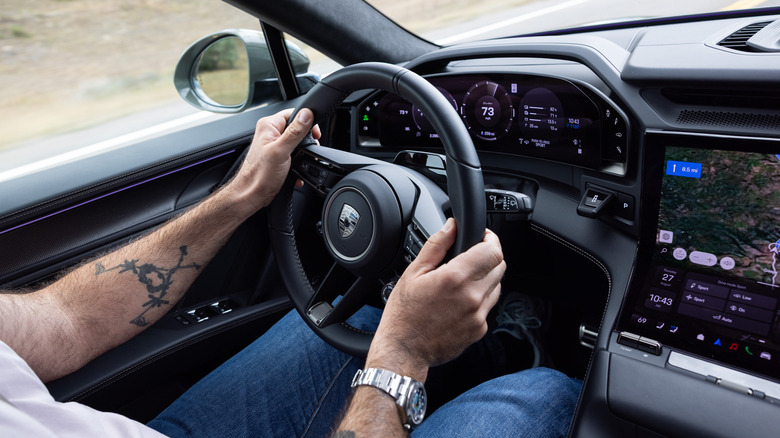
Eventually, after plenty of journalistic fiddling between modes, the best performance possible came in Sport mode with the dampers set to Comfort and ESC fully "off" (or as much as possible). Then, with the breadth of aggressive allowance opened up, the occasional impressive slide around a wider bend became possible.
 Michael Teo Van Runkle/SlashGear
More importantly, the whole chassis still rode so smoothly. Porsche's Active Ride truly bedevils comprehension, especially because of how much I tend to hate big, heavy cars that utilize similar hydraulic roll control systems—the Rivian R1 and Land Rover Defender Octa come to mind (and even the Porsche 911 Dakar, counterintuitively). Hydraulic roll control tends to work better on lightweight supercars, like McLarens, that don't need to pump up quite so much pressure and effectively wind up riding on near-solid hydraulic fluid.
Porsche absolutely nailed Active Ride
Leave it to Porsche to absolutely nail the tech this time around. But Active Ride also serves as a sort of microcosm for everything the Cayenne Electric manages to achieve. Unlike other EV manufacturers that try to mask the impression of mass with falsely lightened steering and overly flattened suspension, Porsche accepted that the Cayenne EV will simply weigh a ton (or more literally, two tons). Why hide the fact?
As the most powerful production Porsche of all time, with sufficient range to match the brute force, the capability alone serves as the main selling point. Hence the tight steering with a satisfactory level of resistance and on-center fidelity that matches the honest weight, plus body roll that's both communicative and compliant rather than all-out hard—and therefore harsh.
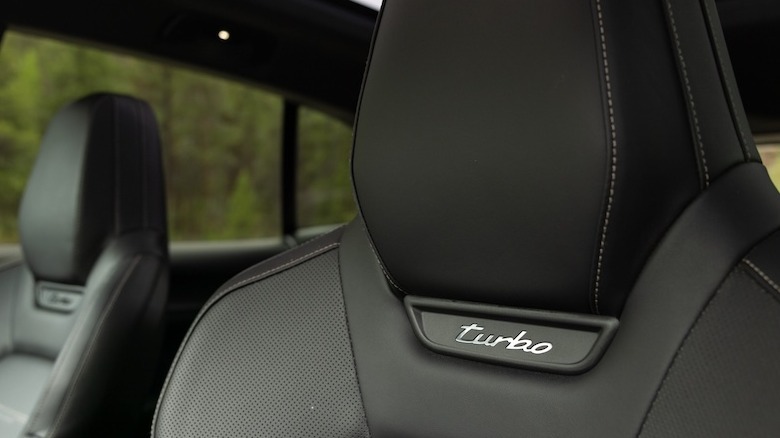 Michael Teo Van Runkle/SlashGear
The resulting ride quality builds confidence rather than hiding behind smoke and mirrors, which makes roaring around even through typical Colorado afternoon rain an absolute breeze. Does anybody truly need a family hauler so mighty, and mightily heavy? Absolutely not. And even if the Cayenne Electric runs counter to the lightweight and nimble ethos that made Porsche stand out from the broader automotive industry for so long, the surprisingly enjoyable nature of such a massive vehicle still reveals where spectacular engineering can break new ground.
Topping up at a fast charger
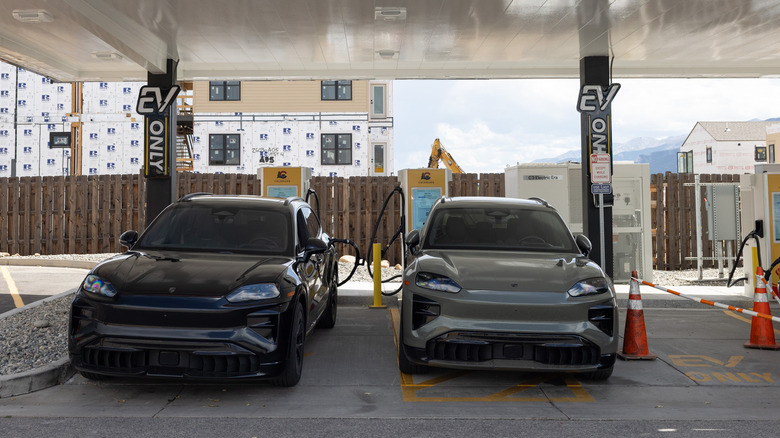
The range stats even exceeded expectations, as the car predicated 360 miles remaining at 100% state of charge to start the day, then used 39% to drive the first 104 miles including a big climb and the gravel stage. By the time we reached a charger in Buena Vista to top up at a janky station before the drive over Independence pass, the battery showed 35% range with 103 miles remaining.
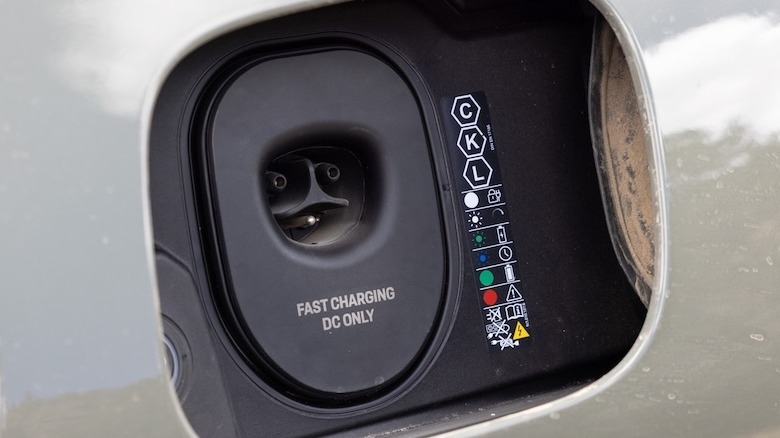
In nine minutes on a "fast" charger that peaked at just 170 kilowatts momentarily, using the CCS adaptor for the standard NACS DC port, the Cayenne added 10% and 34 more miles—enough to get us home to Aspen comfortably.
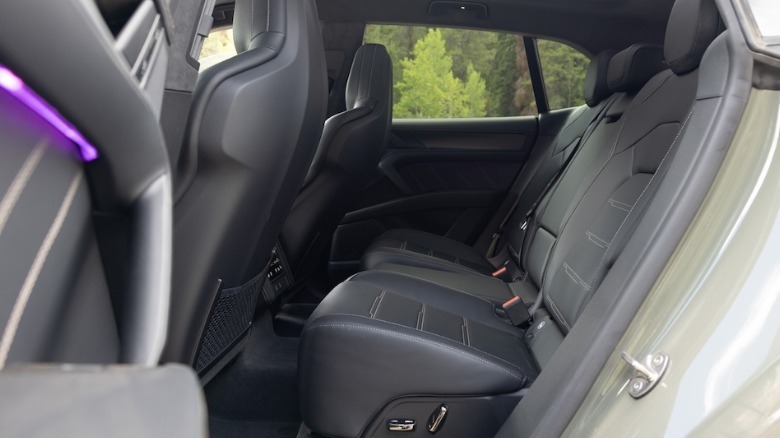 Michael Teo Van Runkle/SlashGear
Not bad given repeated romps at full throttle and so much elevation gained. Then, at the top of Independence Pass, I swapped in to drive a base non-Turbo, non-S Cayenne Electric for the downhill segment. That means air suspension, no Active Ride, and lower ratings of "just" 435 horsepower and 615 lb-ft. Somehow, the base model feels far lighter despite cutting just 90 pounds. Maybe the air suspension and non-R Pirelli tires contributed to lighter turn-in under braking, though then the mass and skittering tires pushed out through corners rather than carving tighter and tighter as in the Turbo.
A quick romp in the base Cayenne Electric, too
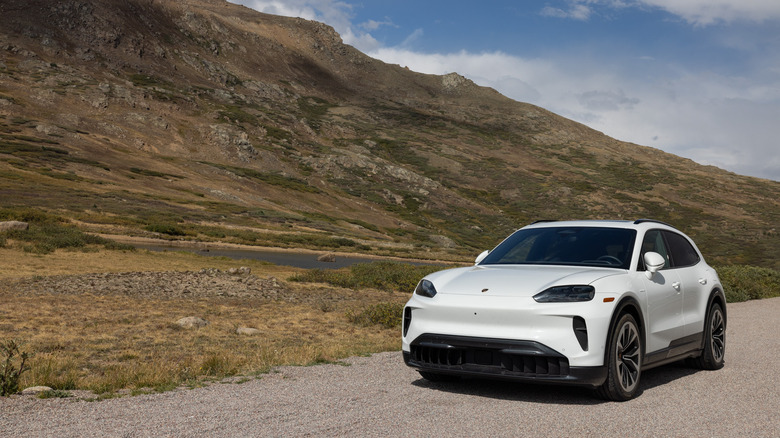
Comfort never quite reached the same level of comfort, either, so altogether–with the maybe 10% of on-edge handling prowess lost–Active Ride stands out as something of a no-brainer. But that option only comes on the S and Turbo, a bummer since, as usual for Porsches, the sticker prices escalate quickly. That first Turbo started at $163,000 and crept up to a hefty $197,820 as tested. Even the base's $109,000 base price inflated to $139,440 with options—right around the same price as a loaded Macan GTS Electric.
 Michael Teo Van Runkle/SlashGear
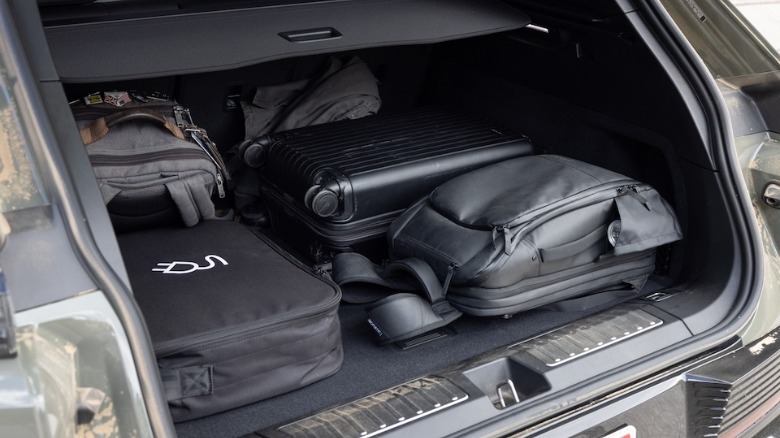
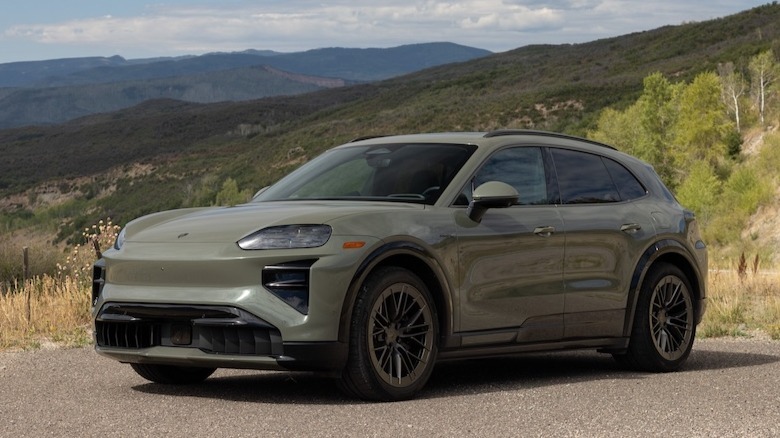
The Macan EV also surprised me earlier this year, as a stupendous little city runabout. And the interior stats make comparing the two quite fair, actually: the Cayenne SUV with rear seats folded offers 56.1 cubic feet of cargo capacity, while the Macan SUV manages 47.6 cubic feet. And the Cayenne's frunk—one of Porsche's greatest attributes that I use all the time whenever available on a 911, Cayman, Macan, or Cayenne—only holds 0.2 cubic feet more. Meanwhile, a base Macan Electric starts at $82,650 for the single-motor rear-wheel-drive variant.
 Michael Teo Van Runkle/SlashGear
Still, the sheer power differential (pun fully intended) between a Cayenne Turbo Electric and even a Turbo GT, which pumps out "just" 650 ponies but costs another 30% more to start, makes the tradeoff for everything an EV brings to the table quite appealing. So much so, in fact, that I fully expect to start seeing more and more Cayenne Electrics regardless of trim level around Los Angeles in the very, very near future. And no doubt charging outside the swankiest ski chalets in Aspen come winter, too.