

9 Signs You Should Replace Your Soundbar Or Surround Sound Speakers
We may receive a commission on purchases made from links.
A great soundbar or an elaborate speaker system is a must-have for anyone who wants the audio-visual experience to be top-notch. Anyone sticking to their TV's speakers is holding themselves back from enjoying movies, TV shows, and games with a heightened sense of immersion. The expansive and rumbling cinematic audio of your favorite media deserves better.
A top-rated soundbar that complements your TV is great for a straightforward upgrade, with some soundbars coming equipped with 7.1 channels to emulate that surround sound feel. Look to units like the Devialet Dione and the Samsung HW-Q990F if you want some of the best soundbars according to audiophiles. However, if you have the space in your living room — not to mention a larger budget — to accommodate a proper surround sound setup, then the Sony Bravia Theatre System 6 and the Klipsch Reference Cinema System 5.1.4 are two highly recommended options.
However, as is the case with any device, obsolescence can rear its ugly head sooner or later. In the case of your speakers, you'll find a bunch of warning signs making it clear that your audio systems are on their last legs and in dire need of a replacement. Sound issues, dated features, and wear & tear should not be ignored, especially if you're an audiophile who doesn't want to make any compromises in this department.
The audio quality is all over the place
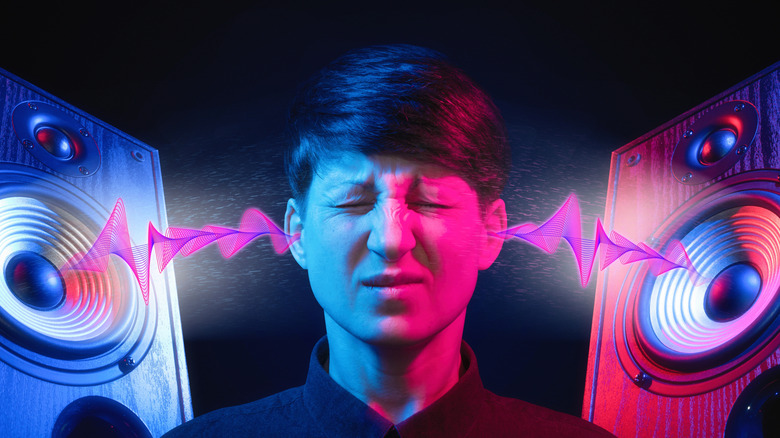
There's a reason why so many people shy away from playing their speakers at full blast. Aside from the obvious noise issues, pushing your amplifier past a certain limit can cause the audio to start crackling. This warning sign should be enough to make you stop, but if you continue to tax your speakers, a bunch of other problems will surface. The heat generation in your speakers can damage components like the voice coil, meaning that your crackling audio will become a permanent mainstay instead of a temporary issue. At this point, repairs or a replacement will be required... although make sure that your connections aren't faulty before resorting to this drastic course of action.
This is far from the only audio issue that serves as a warning sign for the health of your surround sound speakers and soundbar. Some speakers get completely blown out, a particular sound frequency may not be emitted properly, or there's significant audio delay despite you double-checking if any wires are out of place. In such an event, it's entirely possible that your speaker is on the verge of dying. Replacing it with a state-of-the-art model should become a priority in this case.
There's noticeable external damage
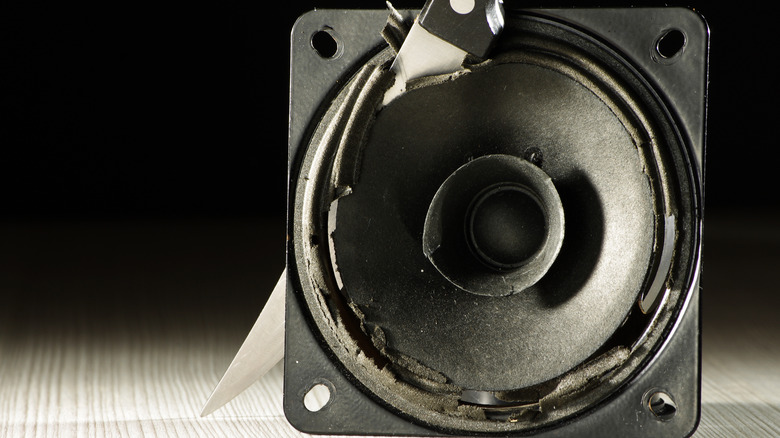
This may seem like a problem exclusive to Bluetooth speakers that are handled clumsily as opposed to stationary soundbars and surround sound speakers. However, that doesn't mean your sound system can't suffer any external damage. Moving into a new house is when you should be very careful about protecting your audio hardware, although rowdy kids, chaotic pets, and carelessness can also cause a towering home theater speaker or a precariously placed soundbar to tumble to the ground as well.
There's only so many falls your speaker can handle before its internal components get all out of whack. Sometimes, repairs will get the job done, but in the event that it doesn't, it's time to find a replacement. Of course, physical damage can also be accrued in other ways, such as any harmful voltage spikes, continuous exposure to sunlight, or water spillage. Either way, if looking around your affected speaker is enough to convey that something is really wrong, then a new sound system is in the cards.
Connectivity options are limited
Audio formats have become more and more elaborate over time, with Dolby Atmos and DTS:X being two of the best and most prevalent forms of surround sound tech that any modern soundbar or home theater system would be lost without. However, if your trusted audio system was bought many, many years ago, then chances are that it can't support these advanced audio formats.
This is because an HDMI ARC (Audio Return Channel) is the bare minimum you'll need to provide the bandwidth that accommodates both Dolby Atmos and DTS:X formats. In fact, we'd recommend getting a sound system that supports HDMI eARC (Enhanced Audio Return Channel) if uncompressed audio is a priority... and why wouldn't it be, if you're spending the big bucks on such an elaborate system in the first place?
If you have an older setup, then chances are that you're relying on an optical connection or 3.5mm jack. These are very outdated by modern standards and don't support the bandwidth for anything other than compressed surround sound. If your sound system is so old that it uses an RCA connection, then you can forget about anything other than basic stereo audio.
Oh, and before you make this crucial mistake, don't use Bluetooth to circumvent the need for an HDMI eARC connection. Aside from the limited bandwidth issue we've already mentioned, Bluetooth is notoriously laggy for elaborate speaker systems.
Modern features are missing on your speaker system
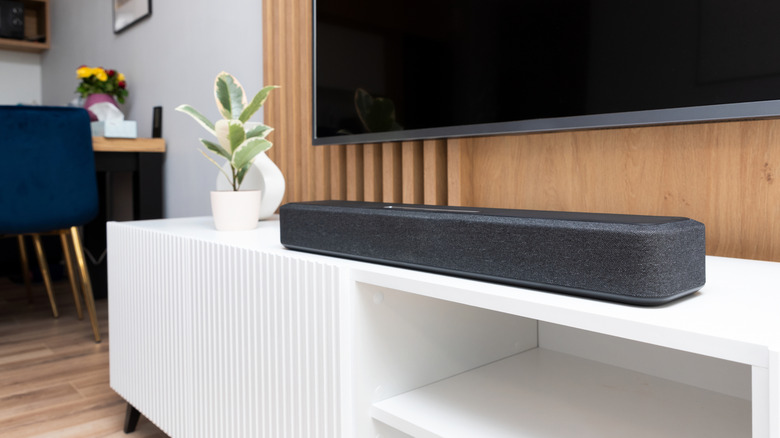
Dolby Atmos and DTS:X support isn't the only feature a modern speaker system should have. Most major surround sound brands add features that let you automatically calibrate to your room's acoustics to ensure optimal audio output. Some soundbars have very useful features, like Samsung's Q-Symphony, that let them work harmoniously with other compatible speakers — including the ones on your TV — using the additional channels for more dynamic, spatial audio that leads to a richer soundscape. If you hate having to strain your ears to hear dialogue, then a lot of sound systems come with speech boost to make your movies and TV shows easier to understand.
Missing out on one or two of these features on your soundbar or surround sound system isn't the worst thing in the world, but if you have a very dated sound system that lacks any modern functionality whatsoever, then it's high time you went for an upgrade. Experimenting with these audio features will help you figure out the optimal settings that will help you enjoy everything from quality music to immersive audio.
Your listening environment has changed
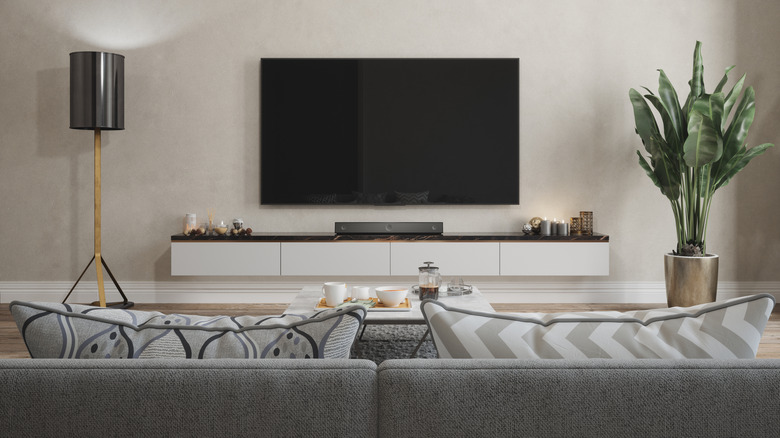
Is upgrading your speaker system once you've shifted to a new house or moved the entertainment room to a different location overkill? Perhaps, but people who've gone the extra mile to make sure that their room's acoustics are perfect for total audio immersion will be holding themselves back with an outdated sound system.
At times, recalibrating your sound system may be enough to make the most of a new listening environment, but this is a half-baked solution for larger rooms that need more speakers to fill the soundscape. If your limited sound system or — even worse — TV speakers aren't cutting it, it's time to buy an elaborate soundbar or surround sound setup that does justice to the time and money you've invested in improving your entertainment room's acoustics. Multiple channels, support for all major audio formats, and auto-room calibration are all perks to keep in mind when deciding on a new sound system that is compatible with your new preferred listening environment.
You haven't prioritized maintaining and cleaning your speakers
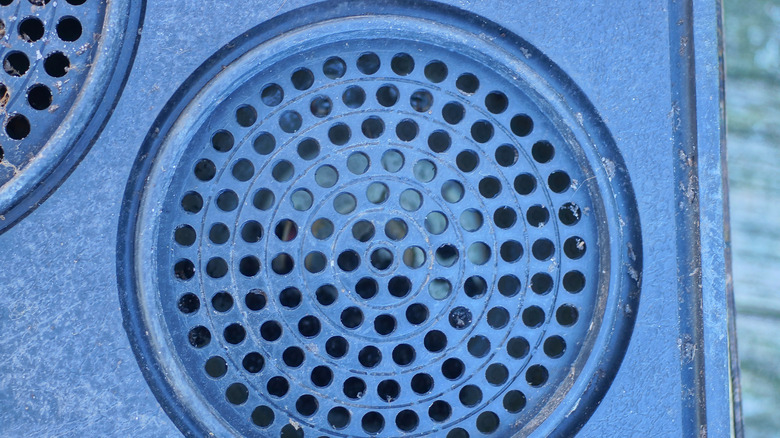
Don't assume that your job is done once you've bought a brand-new home theater system or a state-of-the-art soundbar. Dust accumulation is a real problem, and it's important to wipe down your speakers from time to time to help them look and sound brand-new. The exterior of your speakers should be cleaned mainly for aesthetic purposes, but the practicality of this maintenance becomes clear when you look at your speaker grille. Dust can get stuck there and muffle your audio output, while particularly fine particles can sneak in and land on the speaker cone itself.
A microfiber cloth should be enough for your speaker's exterior, but you may have to use a vacuum to get rid of the dust accumulated on your grille. A can of compressed air can also remove these fine particles, although make sure you've either removed the grille from the main speaker unit or have a solution in place to clean up all the dirt that'll fly inside your speakers. Failing to keep your speakers clean causes the accumulated dust to actively hamper overall audio quality. There's also the issue of heat generation that is exacerbated with too much dust, which is the last thing you'd want.
The repairs cost way too much to be feasible
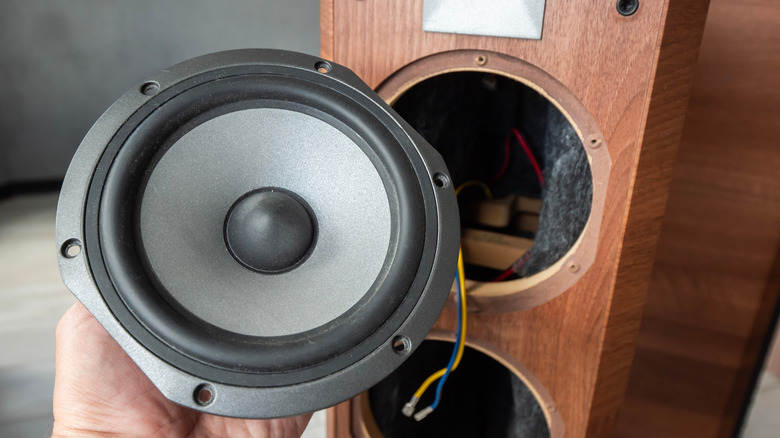
Technically speaking, any problems affecting your speaker can be repaired, either by yourself — a course of action only recommended if you know what you're getting into — or by a technician. In the case of the former, great! You've saved your money and used your technical know-how to help your speaker chug along properly once again. However, if you need to hire someone to fix things for you, first check whether the costs of repairing this speaker will be worth it.
Minor damage shouldn't rack up too much of a bill, but a speaker with a myriad of issues will cost a bundle in repairs, so much so that this might even eclipse the overall price you paid for the sound system! This problem is further exacerbated for older sound systems with parts that can be hard to source for technicians, making repairs either impossible or even more expensive. At this point, just cut your losses, say goodbye to a sound system that has served you well for years, and buy the latest soundbar or home theater system that catches your eye.
Too many remotes cluttering up your room
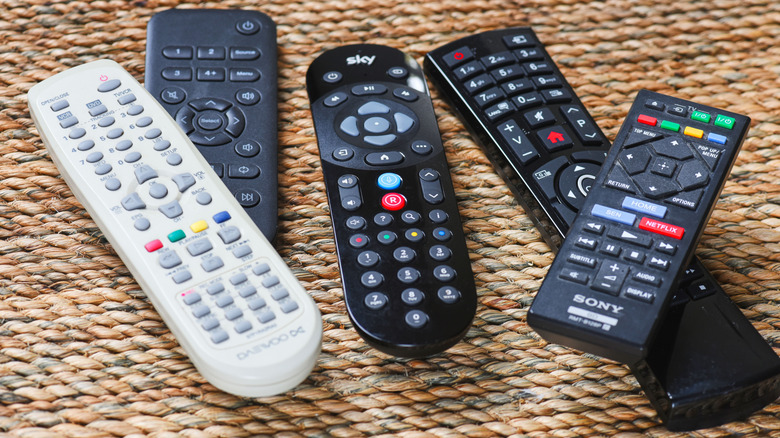
The time when every device in your living room required a separate remote is a thing of the past. With universal remotes and features like HDMI CEC (Consumer Electronics Control), you shouldn't require more than a single remote to control your television, streaming device, and sound system. This avoids the problem of your living room table being cluttered with so many remotes that it looks downright ugly.
If you have an older sound system, then chances are that you absolutely have to rely on a separate remote to control volume levels and tinker with any sound settings. Is it too much to replace your sound system outright for this reason? Perhaps, but a sound system without HDMI CEC is probably outdated enough to warrant this upgrade, regardless. Not only will a new soundbar or home theater system work harmoniously with your TV to let you enjoy amazing audio, but you also won't have to worry about losing one of the many remotes cluttered about in your living room.
The amplifier is causing issues
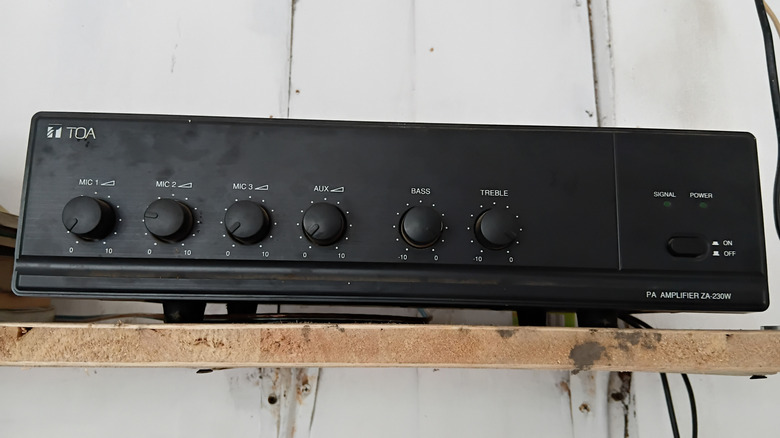
There's a case to be made for separate amplifiers, especially for people who want their audio setup to sound as rich and expansive as possible. People who want to upgrade their audio systems constantly can also upgrade their amplifiers with newer, more powerful ones without having to change their entire speaker setup. However, as active speakers became the norm, people preferred convenience over spending a lot of time on these elaborate speaker-amp setups. As a result, these passive speakers are now only reserved for the most ardent audiophiles who want very powerful and malleable sound systems to be installed in their living room.
The vast majority of commercial-grade speakers on the market now are active speakers, which come bundled with an amplifier. If you use a passive speaker system, then your separate amplifier may be to blame for the audio issues you may be experiencing. Overheating, electrical surges, and overloading the amp with too many connections usually lead to distorted, muted audio. Either get it repaired or replace your setup with an active speaker system that is less of a hassle and blasts high-quality audio without forcing you to fiddle with the connections of a separate receiver.