

IMAX Vs IMAX 70mm: The Key Differences Explained
The IMAX debate is as old as the term "cinephile" itself, and it only reignited with the release of The Odyssey in July 2026. Watching the film the way Nolan had shot and intended was a privilege reserved for people who happened to live near one of the roughly 40 theatres globally capable of projecting 70mm film, a group that discovered it could not shut up about the fact. The rest had to rely on the more popular — and allegedly inferior — digital IMAX format. Did that audience miss out on something? And if so, how much? To know that, we'll have to differentiate between the two formats.
The traditional IMAX 70mm film format first came to be in 1970, when IMAX premiered the film system. Running it was difficult because it needed a purpose-built auditorium and a projector nobody else could service. So for decades, the system was confined to science centers and museums. Digital IMAX solved this problem in 2008 — it could run on 2K xenon projectors and subsequently, on modern laser projectors.
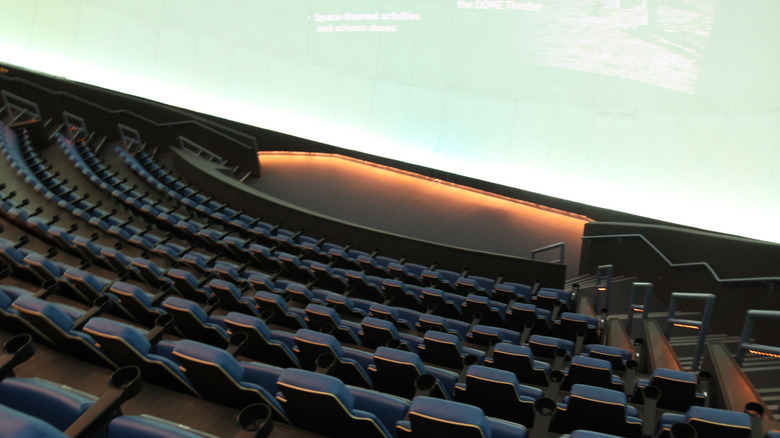
The actual difference in picture is easy to spot. IMAX 70mm projects a significantly larger image – roughly six stories tall – that climbs the wall from floor to ceiling. The image also sits at an aspect ratio of 1.43:1, appearing notably more squarish. Digital IMAX auditoriums feature smaller screens that project a wider 1.90:1 aspect ratio, which, for films shot in 70mm IMAX, crops the top and bottom.
How each format builds a picture
The reason 70mm IMAX is able to pull this off is that it uses a rather unconventional film layout. While digital dominates most cinemas today, traditional films run vertically, so each frame can only be as wide as the strip itself. However, IMAX runs horizontally, pulling the film sideways. This allows the image to run the long way, maximizing the physical area used per frame.
Both edges of a film strip are punched with small holes that the projector's teeth grip to pull it along, and the number of holes a frame spans is how much film that frame claims. A standard 35mm frame takes four of them. An IMAX frame takes 15, measuring at 69.6mm by 48.5mm, providing roughly 10 times the area. Meanwhile, a digital IMAX does not use a strip at all. Instead, the picture is built from a fixed grid of pixels.
Any picture thins out as you magnify it, and digital is no different. What matters here is how much detail is held in reserve before the screen size starts pulling things apart. In digital IMAX, that reserve runs out at four thousand pixels across. This is often estimated to be well short of what a 69.6mm negative carries, which doesn't even have a fixed reserve. That's because its picture forms in millions of light-sensitive particles coating the strip, scattered at random and varying in size. There's no row here to count and no fixed resolution to reach. However, engineers still estimate resolution: IMAX itself puts its cameras near 18K.
What you actually see from a seat
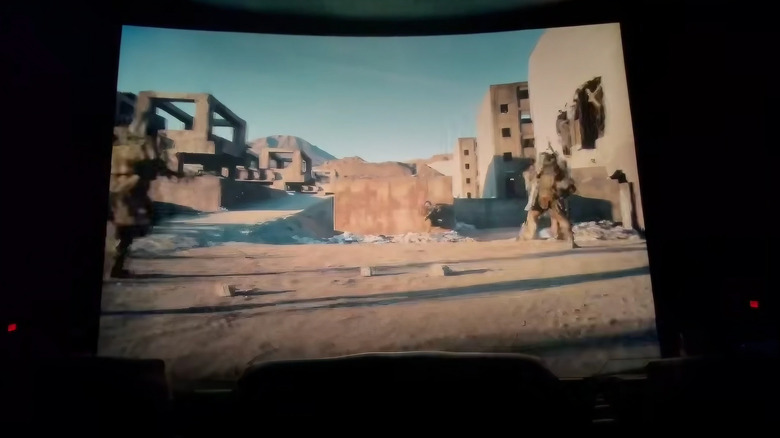
That quality alone virtually eliminates degradation as the picture is spread across massive screens. But even if it is taken into account, the degradation with film is grain, which reads as an image characteristic to many. In digital media, degradation manifests as pixelation, which is perceived as a fault. Sitting in the auditorium at the distances these massive screens demand, though, you will struggle to see differences. The same principle applies to your ability to tell the difference between 4K and UHD.
One factor that works in digital IMAX's favor, though, is contrast. Laser offers far more contrast since it can switch pixels off completely. Meanwhile, lamp shining through film can only get so dark. IMAX itself claims its laser system offers more than double the contrast of its film offering.
However, the biggest deciding factor for most people may not be the nitty-gritty of each format. Rather, it would be scarcity. IMAX says it runs a total of 1,876 systems across 91 countries. Fewer than 50 of them can project film. Chief executive Rich Gelfond told Variety that nobody has built a new IMAX film projector in about 50 years.
Which of the two you should pay for depends on how the film was shot. Go to 70mm when a director captured the movie on IMAX cameras, because only that room shows the frame as composed. Failing that, the truest alternative would be dual-laser IMAX houses capable of reaching the same 1.43:1 ratio. Or you could simply sit at home and hunt for watchables labeled IMAX Enhanced on platforms like Disney+.